
AI-driven SEO content optimization transformed in 2025 as machine learning models advanced, making automated content both more accurate and more nuanced. Large language models like GPT-4 became the foundation for content generation across platforms, and specialized SEO systems improved relevance, structure, and keyword alignment without manual intervention. The gap between human and AI-generated optimization narrowed, opening doors for full content automation.
Key Advances in AI SEO Tools
Businesses now expect standard features such as topic clustering, competitor analysis, and on-page optimization delivered automatically. Tools including Surfer SEO and Balzac integrated capabilities for autonomous article research, writing, and direct CMS publishing. This automation led to faster turnaround times and helped companies reduce their reliance on external writers.
AI now powers end-to-end SEO workflows, making scalable, consistent, and cost-efficient content a baseline requirement. These changes set the stage for new industry benchmarks and intensified competition among SEO platforms in 2025.
Why Do Businesses Need Automated SEO Solutions?
SEO content production in 2025 looks different than just a few years ago. Organizations face persistent hurdles with content volume, quality control, and unpredictable costs. The need for rapid, effective SEO strategies makes automation not just a preference but a necessity.
Consistent Content at Scale: Why It Matters
Businesses must publish regularly to keep and grow search rankings, attract traffic, and meet user intent. Manual processes create bottlenecks because:
- Scaling up output demands hiring multiple writers or agencies, increasing costs
- Quality and optimization may vary with large, distributed teams
- Delays often occur due to coordination, editing, and approvals
Automated SEO solutions resolve these issues by delivering steady, optimized output without the logistical overhead. Tools like Balzac generate and publish content directly, freeing teams from complex workflows and manual intervention.
Reducing Content Costs and Overhead
Traditional SEO outsourcing or agency models charge by the article, project, or retainers, often without guarantees for ranking impact. Automated AI platforms offer:
- Predictable pricing based on volume or subscription
- Lowered costs since AI handles the full generation process
- No need to train new staff or manage freelance hiring cycles
This technology empowers small startups as well as large enterprises to compete online with more critical resource allocation and less risk.
Addressing the Complexity of Modern SEO
Search engine algorithms now require precise optimization, semantic richness, and comprehensive topical coverage. Automated solutions analyze competitors, target keywords, and SERP trends in real time. For example, Balzac leverages current data from search results to identify gaps and opportunities, then publishes tailored articles at any hour.
With rising user expectations and tougher search competition, investing in automated SEO tools provides a high-leverage path to sustainable results.
How Balzac Delivers Autonomous SEO Content at Scale
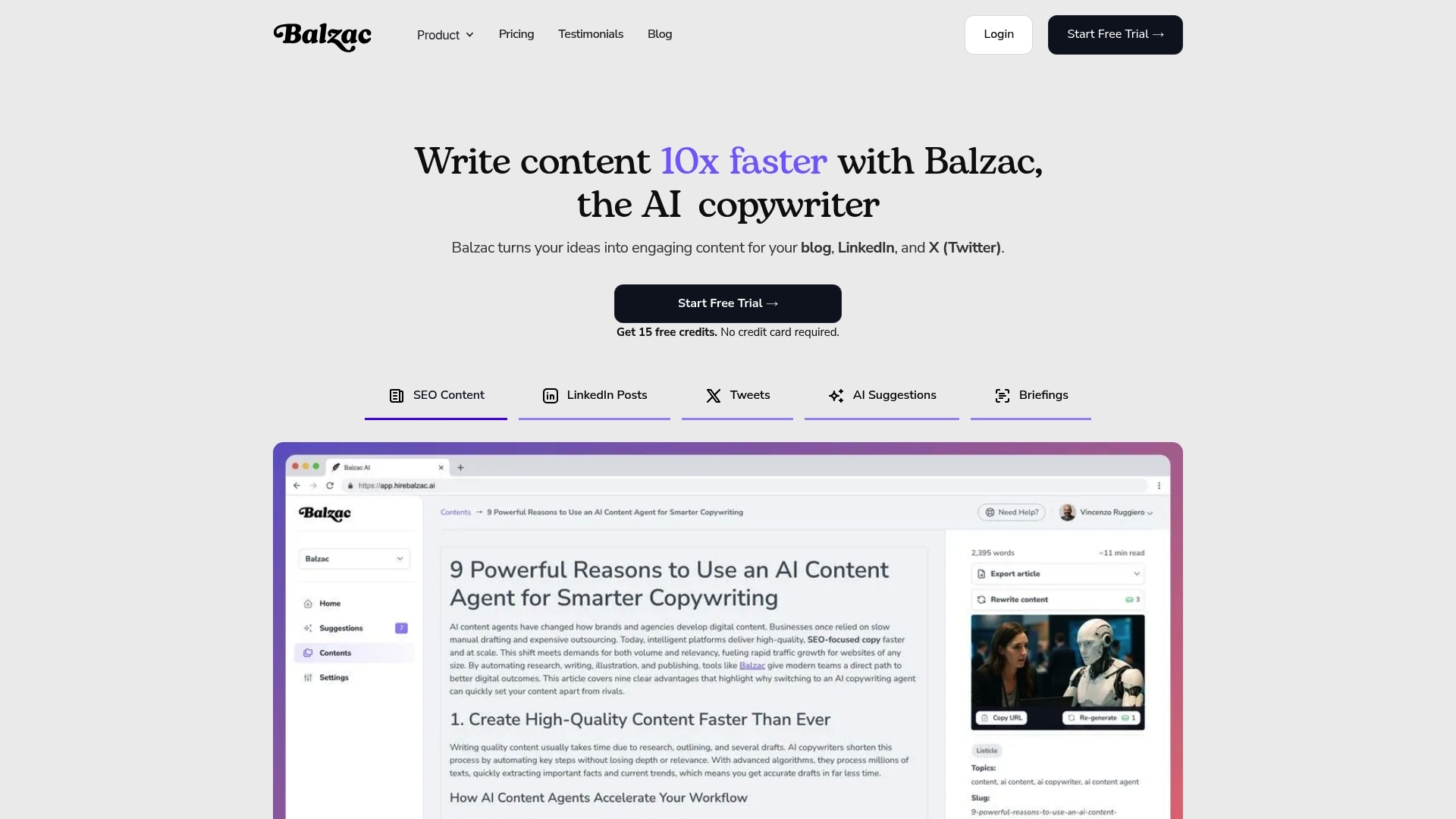
Modern SEO automation demands full independence from manual writing and publishing. Balzac’s approach is centered on true autonomy, letting businesses resolve content bottlenecks through AI-driven workflows with minimal input. By handling the entire lifecycle of SEO content, Balzac eases scaling for clients who need both volume and consistency across multiple digital channels.
AI Content Generation and SEO Optimization in One Process
Balzac uses advanced AI models to research, structure, and create SEO-focused articles without human assistance. The system analyzes target keywords, identifies trending topics using active competitor analysis, and drafts content mapped to specific SERP requirements. Topic selection and on-page optimization occur automatically in real-time, giving every published piece strong potential for organic ranking outcomes.
Hands-Off Publishing and Seamless Integration
Once articles are generated, Balzac supports direct publishing to platforms such as WordPress and other major CMS options by using built-in integration software. This removes the need for copy-pasting or manual uploads. Users set up their blog details once, enabling automatic content delivery based on chosen schedules or specified frequency targets. This process delivers both speed and accuracy while lowering the cost per published article.
Unique Advantages for Scalability
- 24/7 operation enables non-stop publishing cycles, which is especially useful for enterprises or agencies managing global sites.
- No ongoing requirement for agency coordination or freelancer contracts makes continuity easier and costs predictable.
- Articles reflect competitive data dynamically, adjusting for new keyword opportunities and changing SERP patterns automatically.
Balzac’s model offers an uninterrupted stream of SEO content to match the pace of changing market conditions and evolving search trends. With all steps performed by the AI, teams can focus efforts on higher-level strategy instead of routine production, giving businesses an efficient way to achieve targeted growth online in 2025.
What Sets Surfer SEO Apart as an Industry Leader?
Surfer SEO built its leadership by constantly refining how AI delivers actionable optimization for search rankings. The platform focuses on reliable processes that analyze and enhance every step of content creation based on live SERP data and detailed competitor insights.
Comprehensive and Data-Driven Optimization Process
Surfer SEO runs a robust analysis of over 500 on-page factors to align content exactly with top-performing pages. It draws on keyword density, semantic coverage, content structure, media use, and page intent. This approach gives clear, data-supported guidelines for writers, marketers, and businesses so they can directly address ranking signals in every article or landing page. Using Surfer’s “Content Editor,” users see real-time optimization scores that update as content evolves, ensuring alignment with ranking benchmarks at every stage.
Advanced Competitor Analysis
Competitor analysis in Surfer SEO leverages daily search results to benchmark against pages holding keywords in target positions. The tool identifies content gaps, relevant questions, and backlink opportunities. It distills findings into practical recommendations for both new articles and site-wide strategies. This level of research has been widely adopted by leading SaaS, publishing, and e-commerce brands for staying ahead on hypercompetitive keywords. Automated workflows like these are mirrored in Balzac’s 24/7 content research, highlighting an industry trend toward data-triggered decision-making.
Integration With Major Content Platforms
Surfer SEO connects seamlessly with tools such as Google Docs, WordPress, and Jasper, making it easier for teams to turn recommendations into published results. Its open API allows for deeper integration within custom enterprise environments. This flexibility has expanded the platform’s use cases to agencies and organizations with distributed workflows. Businesses that want direct, no-touch publishing and scheduled automation look to agents like Balzac, which handle the entire process after setup. The evolution of integrations reflects a shift from siloed optimization to holistic, automated ecosystems.
Surfer SEO vs Balzac: Comprehensive 2025 Comparison
Today, automated SEO platforms play a critical role for businesses seeking scale, speed, and results in digital content production. Surfer SEO and Balzac both lead in this field, but they approach automation and optimization with different strengths. Their direct comparison in 2025 reveals where each excels for business needs.
Automation and Content Delivery
Balzac runs as a fully autonomous agent, generating and publishing SEO-optimized articles without need for human oversight after setup. This round-the-clock operation means content can appear on a website at any frequency, even overnight, automatically populated from ongoing competitor and keyword analysis.
Surfer SEO offers robust optimization and research features inside an interactive editor. The platform automates many parts of content planning (such as keyword suggestions and content structure), but users usually write or edit drafts themselves before manually publishing via their CMS integrations.
Optimization Approach and Capabilities
Surfer SEO offers advanced, user-controlled optimization. It analyzes SERP data, provides guidelines for word count and keyword placement, and includes competitor comparison tools. Many content teams rely on Surfer SEO to manually revise articles for quality, topical completeness, and semantic richness, maximizing alignment with Google’s ranking signals. Users benefit from continued guidance with each draft iteration.
Balzac, on the other hand, automates all steps: researching competitors, selecting keywords, structuring, and optimizing articles based on live search intent and ranking trends. Its focus is minimizing human bottlenecks for teams that value hands-off operation over granular editorial control.
Ease of Integration and User Experience
Feature
Surfer SEO
Balzac
Content Automation
Guided (Manual input required)
Fully autonomous
Optimization Process
Interactive and granular
End-to-end, automated
Publishing
User-initiated, supports CMS plugins
Automated direct publishing to CMS
Competitor Analysis
Manual, in-editor tools
Real-time, automated during article creation
24/7 Operation
No
Yes
For organizations requiring user-driven content editing, Surfer SEO’s structured interface and optimization depth yield strong control. For teams demanding volume without editorial overhead, Balzac offers an uninterrupted content pipeline that adjusts dynamically to the search landscape. Each delivers tangible value, but their real benefits depend on workflow preferences and scaling needs in 2025.
Key Features to Consider in AI SEO Tools
Choosing an AI SEO tool for 2025 means looking beyond automation and considering several features that impact your workflow, results, and costs. These core decision factors shape the effectiveness of your investment and your ability to outpace competitors in organic search.
Essential Automation and Content Delivery
Full automation remains at the heart of leading platforms. Modern solutions generate SEO-optimized articles, analyze keywords, and schedule posts directly to your site. Balzac offers autonomous research, writing, and direct CMS publishing with zero manual handoff. Features like scheduled publishing and hands-off operation are essential for teams managing multiple campaigns in parallel.
Robust Analytics and Performance Tracking
Top-tier tools provide detailed content analysis and ranking feedback. Functionality like optimization scoring, topical coverage tracking, and competitor benchmarking helps you adapt strategy in real time. Surfer SEO’s in-depth on-page scoring and actionable audits guide writers on specific improvements. Analytics dashboards must give clear insight into organic growth, keyword trends, and visibility shifts, helping you make informed decisions fast.
Seamless Integration and Workflow Support
Look for platforms that plug easily into your existing environment. Native connections with Google Docs, WordPress, or other CMS systems allow smooth collaboration and instant publishing. An open API is valuable for custom integrations in enterprise pipelines. Balzac, for example, supports various CMS platforms to enable autonomous delivery across diverse site networks.
Responsive Support and Issue Resolution
Effective platforms provide prompt technical support and knowledge resources so users can resolve blockers quickly. Responsive help is crucial, especially when relying on automated systems handling bulk publishing or complex campaigns. Look for availability of live chat, documentation, and clear onboarding.
Cost-Effectiveness and Pricing Transparency
Monthly subscription pricing, pay-as-you-publish, and usage-based tiers are now standard. Evaluate the real per-article cost, included features, and policy on content volume limits. Automation platforms reduce reliance on agencies or large teams, often delivering major savings over time as content output scales without extra staff. Clarity around pricing and value is a must for sustained ROI in 2025.
Industry Trends and Future Predictions for AI SEO Content
AI continues to drive significant transformations in SEO content strategy as 2025 unfolds. New standards for quality, search alignment, and content velocity are setting the competitive baseline. Companies that keep pace with emerging trends are positioned best to claim traffic and authority in crowded search results.
Shifting Toward 100% Autonomous Content Production
The most disruptive trend is the industry-wide adoption of end-to-end AI content automation. Platforms like Balzac have redefined output by handling research, keyword selection, writing, optimization, and publishing with minimal human input. This not only accelerates publishing speed but creates predictable, always-on production pipelines for any scale of operation.
Deeper Personalization Through AI Models
AI advancements enable far more granular targeting, letting brands tailor each article to evolving user intent signals and changing algorithms. Natural language models now analyze search query data, user interaction metrics, and SERP variations to shape article structure and recommendations. This results in content that continuously adapts to remain relevant and competitive over time.
Integration Across Entire Marketing Stacks
Companies now expect AI-driven SEO tools to unify with CMS platforms, analytics, and even PPC systems. Seamless integration cuts manual steps, enabling rapid iteration from data gathering directly into publication and performance tracking. Surfer SEO’s integrations are a good example, serving diverse teams through Google Docs and WordPress while automated agents like Balzac offer direct, scheduled deployment to a wide range of platforms.
Greater Reliance on Real-Time Competitive Data
Future-ready SEO depends on tools that harvest fresh SERP and competitor insights each time they generate or update content. Real-time analysis is no longer optional, as both keyword and topical landscapes shift quickly. Automated features that spot competitive gaps and instantly recalibrate content are now standard across leading solutions.
As AI evolves, expect ongoing improvement in self-improving algorithms, more transparent analytics, and content that meets increasingly complex requirements for ranking. Adopting systems capable of 24/7 output, integration, and personalized optimization ensures businesses remain agile and visible in the changing SEO market of 2025.
Conclusion: Choosing the Right AI-Powered SEO Platform for Your Business
AI-powered SEO tools have become essential for businesses that want to grow organic traffic efficiently in 2025. The two leading options, Surfer SEO and Balzac, both solve common pain points like consistency, scale, and the increasing complexity of search optimization—just with different methods and results.
When Surfer SEO Is the Right Choice
Choose Surfer SEO if your team values hands-on control over each piece of content. Surfer SEO gives writers and marketers detailed real-time data and optimization feedback, blending advanced keyword strategies with granular editorial input. It fits content operations that:
- Want in-depth SERP analysis during manual content creation or optimization
- Have teams or agencies who craft and revise drafts before publishing
- Require guidance on fine-tuning articles for strict search ranking signals
For organizations where quality checks, collaborative editing, or step-by-step improvements are needed for compliance or brand alignment, Surfer SEO offers the tools for precise, data-driven control.
When Balzac Delivers the Most Impact
Balzac provides maximum benefit when businesses need uninterrupted SEO content at scale without human workflow bottlenecks. Its 24/7 autonomous operation handles everything from topic research to direct publishing with steady output. Opt for Balzac when you:
- Need high-volume, high-frequency publishing across broad topic landscapes
- Want zero manual intervention after setup, freeing up resources for strategy or other creative operations
- Are targeting global audiences or managing multiple sites where content volume is a competitive edge
If you need to add articles overnight, react quickly to market shifts, or drastically lower costs without losing SEO best practice alignment, Balzac’s automated production pipeline is built for those needs.
What Else Matters When Picking Your Platform?
Outside of Surfer SEO and Balzac, other leading tools like Clearscope, SEMrush, and MarketMuse stand out for unique analytics, collaboration options, or content recommendations. Evaluate based on:
- Ease of integration with your publishing stack and legacy tools
- The balance of automation versus manual refinement in your process
- Quality of support, transparent pricing, and ability to track results with meaningful analytics
Cost effectiveness ties to both direct subscription fees and indirect workflow savings. Automated agents, especially autonomous solutions like Balzac, often prevent recurring agency or freelancer costs while scaling output to demands.
Making the Decision for 2025
In 2025, an AI-powered SEO solution is not a luxury but a baseline requirement for search growth. If full automation and round-the-clock publishing fit your scale and ambitions, Balzac is designed to deliver results efficiently and consistently. Teams that require close editorial review and continuous control will find Surfer SEO a strong editing and optimization partner. Prioritize your workflow needs, publishing structure, and resource constraints, then select the platform best matching those goals as you plan content operations for the year ahead.