
AI content automation uses software to turn a content goal into publishable assets with less manual writing, editing, and coordination. In practice, it combines draft generation, workflow support, and SEO checks so teams can publish more often without expanding headcount.
What Jasper AI Content Automation Means
Jasper AI is an AI writing platform that helps teams go from a prompt or brief to a usable draft, then iterate quickly with on brand language. You still set strategy, approve claims, and control publishing, but Jasper reduces the time spent on blank page work and repetitive rewrites.
Think of Jasper as a system for assisted production: you bring the topic, angle, and sources, and the tool accelerates the writing and refinement loop.
How Jasper AI Works From Brief to Optimization
Jasper’s typical workflow looks like this:
- Brief input: You provide the target keyword, audience, intent, internal notes, and any must include points (like product details or compliance language).
- Outline creation: Jasper generates a structure you can edit before any long form drafting.
- Draft generation: You produce sections or a full draft, then refine tone and clarity with rewrites.
- SEO and quality pass: You check on page basics (headings, topical coverage, readability, internal links) and verify facts before publishing.
Content Automation vs Full Autonomy
Most teams use Jasper to speed up writing, but they still manage publishing in their CMS. If you want keyword to published automation, tools like Balzac focus more on autonomous SEO workflows, including topic discovery, article creation, and publishing.
Who Jasper AI Is Best For (and When It’s the Wrong Fit)
Jasper AI fits best when you need faster content production with human control. In the workflow from the previous section, Jasper handles the jump from brief to draft well, but your team still owns strategy, fact checking, and publishing choices.
Who Jasper AI Is Best For
Jasper AI works well for teams that want speed without fully automating the entire SEO pipeline. It is a strong fit when you already know what to publish and you need help turning that plan into consistent drafts.
Typical Use Cases Where Jasper Performs Well
- Marketing teams producing blog posts, landing page copy, email sequences, and ad variations.
- Content agencies that need writers to move faster while keeping editorial review and client approvals.
- Founders and small teams with clear positioning who want drafts they can edit into publishable content.
- SEO teams that already run keyword research in tools like Ahrefs (an SEO platform) and want faster execution.
Best Fit Team Setups
Jasper tends to deliver the best results when you have at least one person who can own editorial QA. In practice, that means:
- A marketer or editor who provides briefs and reviews outputs.
- Clear brand guidelines, examples, and constraints to reduce rewrites.
- A workflow that includes fact checking for any claims, stats, or comparisons.
Budget And Operational Reality Check
AI writing tools reduce writing time, but they do not remove the need for strategy, editing, and governance. Budget for:
- Prompting and briefing time.
- Editorial review and subject matter validation.
- On page SEO checks and internal linking decisions.
If your budget assumes near zero human involvement, Jasper can feel like a mismatch.
When Jasper AI Is The Wrong Fit
Jasper is not ideal if you need end to end autonomy from keyword to published post, or if your content must meet strict technical, medical, or legal accuracy requirements without dedicated review.
- If you need automated topic discovery, writing, and publishing with minimal supervision, an autonomous SEO agent like Balzac can fit better.
- If your team lacks an editor and you publish at scale, you risk inconsistent voice and unverified statements.
- If you require tight CMS automation and hands off publishing, you may prefer systems built around publishing workflows, not only drafting.
To sanity check your fit, compare your goal, draft velocity, or autonomous publishing, then match the tool to that operating model.
Jasper AI Key Features for SEO Content Creation
SEO content quality depends less on raw word output and more on repeatable control, meaning you need consistent structure, voice, and review rules. Jasper AI focuses on assisted writing, so its best SEO features support drafting speed while keeping humans in charge of accuracy and publishing.
Templates and Structured Drafting
Jasper uses guided templates and long form workflows to reduce blank page time and keep articles scannable. You can start with a blog post format, product description, or ad copy structure, then adapt the output into an SEO outline with clear H2 and H3 sections.
For SEO teams, the main value is consistency, Jasper helps writers follow the same content pattern across many pages, which improves editorial QA and makes content easier to optimize later.
Brand Voice and Style Consistency
Brand voice features aim to keep phrasing and tone consistent across authors and across time. This matters for SEO because voice drift often leads to weak intros, vague claims, and off intent sections that increase rewrites.
- Voice guidance: You can steer vocabulary, sentence length, and tone so drafts match your site.
- Reuse of approved patterns: Teams can standardize intros, CTAs, and disclaimer language.
Workflows for Briefs, Outlines, and Iteration
Jasper supports a brief to outline to draft loop, which keeps writers focused on search intent. In practice, teams use it to iterate faster on key on page elements:
- Angle testing (informational vs commercial framing)
- Section rewrites for clarity and specificity
- Snippet friendly definitions and lists
Collaboration and Approval Support
For businesses, the bottleneck often sits in feedback, not writing. Jasper supports collaboration so editors and subject matter experts can review drafts sooner and reduce rework. A clear review loop helps prevent SEO breaking edits, like removing key headings or stripping internal links.
Guardrails and Quality Control
Jasper does not replace fact checking. It helps you add process guardrails so you catch problems before publishing:
- Require sources and verify claims before final approval
- Enforce do not say lists for regulated or sensitive topics
- Run plagiarism checks with tools like Copyscape (a plagiarism detection service)
If you need stricter autonomy, meaning the system goes from keyword research to a draft to publishing in WordPress or Webflow, an autonomous agent like Balzac fits better than a writing first platform.
How to Use Jasper AI to Produce SEO Content Step by Step
Jasper works best when you already know what you want to rank for, and you need a repeatable production loop from keyword to publish ready draft. Use the steps below to keep output consistent and easy to review.
1) Lock the Keyword, Intent, and Angle
Start by choosing one primary keyword and writing the search intent in plain language, for example comparison, how to, or pricing. Then write the angle you will cover that others miss, such as a specific audience, a workflow, or a constraint.
- Primary keyword: One phrase you want the page to rank for.
- Secondary keywords: 3 to 8 related terms you must mention naturally.
- Sources: Paste links or notes you trust so you can validate claims.
2) Write a Brief Jasper Can Actually Follow
A good brief removes guesswork. Give Jasper clear constraints: target reader, reading level, what to include, what to avoid, and any required terminology.
- Audience and problem statement
- Unique points (product reality, process, examples)
- Voice rules (short sentences, no hype, preferred words)
- Compliance notes (claims that require citations or legal review)
3) Generate and Edit the Outline First
Ask Jasper for an outline that matches intent, then edit before drafting. A strong outline creates clean headings (H2, H3) and answers the main question early. Add sections you know you need, such as pricing, alternatives, or implementation steps.
4) Draft in Sections, Not One Long Prompt
Generate one section at a time and feed Jasper the previous heading and the next heading. This keeps the writing on topic and reduces repetition. After each section, rewrite for clarity and specificity, then insert concrete details your team owns (product limits, timelines, numbers you can prove).
5) Do an On Page SEO Pass
Use a checklist so every article ships with the same baseline quality.
- Title tag supports the primary keyword and matches intent.
- First 100 words state the answer or promise clearly.
- Headings cover the topic fully, no duplicate sections.
- Internal links point to relevant supporting and conversion pages.
- Meta description summarizes the outcome, not the process.
6) Final Edit: Facts, Originality, and Brand Voice
Validate any claim that sounds like a statistic, a feature comparison, or a legal statement. Add at least one original element, such as your screenshot, example workflow, or a short quote from a subject matter expert. If you want more automation beyond drafting, an autonomous agent like Balzac focuses on the keyword to published path, which reduces manual handoffs.
Scaling Output: Editorial Workflows, QA, and Content Governance
Publishing more pages only helps if each page meets the same editorial bar. The fastest way to scale with Jasper is to standardize decisions that editors otherwise repeat on every draft: what “good” looks like, who signs off, and which checks block publishing.
Editorial Workflow That Scales
A scalable workflow uses clear handoffs and removes ambiguous ownership. Keep roles simple and consistent across every article:
- SEO owner: sets keyword, intent, internal link targets, and required entities.
- Writer: drafts in Jasper using the brief, then self edits for clarity and structure.
- Editor: enforces style rules, checks SERP alignment, and tightens claims.
- Subject matter reviewer (as needed): validates accuracy for technical topics.
If you need fewer human touch points, an autonomous agent like Balzac can handle more of the pipeline, but you still want an approval gate for brand and accuracy.
QA Checklist That Catches Most Problems
A QA checklist gives you repeatable quality without slowing the team. Use a short list that blocks publishing when it fails:
- Intent match: the introduction answers the query in the first 2 sentences.
- Structure: one clear H1, logical H2 and H3 flow, no duplicate sections.
- Specificity: every major claim includes a reason, an example, or a source.
- Fact checks: verify names, numbers, dates, and product statements against primary sources.
- Originality: run a plagiarism check with Copyscape for high risk pages.
- On page SEO: keyword fits naturally in title, first paragraph, and at least one H2.
- Internal links: add 2 to 5 relevant internal links with accurate anchor text.
Style Rules and Governance
Style rules reduce rewrites because Jasper can follow fixed constraints. Put these rules in the brief and enforce them in editing:
- Approved terminology, brand voice examples, and forbidden phrases.
- Formatting rules for definitions, lists, comparisons, and disclaimers.
- Source rules, for example cite official docs, reputable publications, or vendor documentation.
Governance means you keep an audit trail. Store the brief, draft, reviewer notes, and final URL in one place, then track changes after publishing (rank, clicks, and conversions) so you update pages based on data, not opinion.
Publishing and Integrations: How Jasper AI Fits Into Your CMS Stack
After you finish the draft and QA pass, publishing becomes the next bottleneck. Jasper AI helps with creation and revision, but most teams still push content into their CMS through a copy and paste handoff or a connected document workflow.
Common Publishing Handoff Paths
The cleanest publishing process uses one “source of truth” document, then a controlled transfer into the CMS. In practice, teams use one of these handoffs:
- Direct CMS entry: editor copies final HTML ready text into WordPress or Webflow, then formats headings, images, and links.
- Google Docs handoff: Jasper draft gets refined in Docs, then a publisher imports or copies it into the CMS for final layout.
- Markdown first: the team writes and edits in Markdown, then converts to HTML for a headless CMS workflow.
WordPress: Practical Ways Teams Publish
WordPress publishing usually works best when you separate content editing from block formatting. Keep Jasper focused on clean headings, short paragraphs, and correct link text, then use WordPress blocks for layout.
- Use standard heading levels (H2 then H3) so WordPress generates a clean structure for accessibility and table of contents plugins.
- Add images and schema fields in WordPress, Jasper should not guess image rights or structured data values.
- Run a final preview check to catch spacing, list formatting, and internal link targets.
Webflow: Design System First, Content Second
Webflow teams get better results when they map Jasper output to CMS fields. Write sections in Jasper to match Webflow components, for example intro, key points, and FAQs, then paste each part into its field so designers keep control of layout.
Headless CMS: Treat Jasper Output as Content Data
With headless platforms like Contentful (a headless CMS) or Strapi (an open source headless CMS), publishing depends on predictable structure. Store Jasper output as Markdown or rich text, then let your front end handle styling. This reduces broken formatting across channels.
Where Balzac Fits If You Want Less Manual Publishing
If your main problem is the handoff into the CMS, a writing tool alone may not be enough. Balzac focuses on a keyword to published workflow, including CMS publishing on major platforms, so teams spend less time copying drafts and more time reviewing final pages.
Balzac: An Autonomous SEO Agent That Generates and Publishes
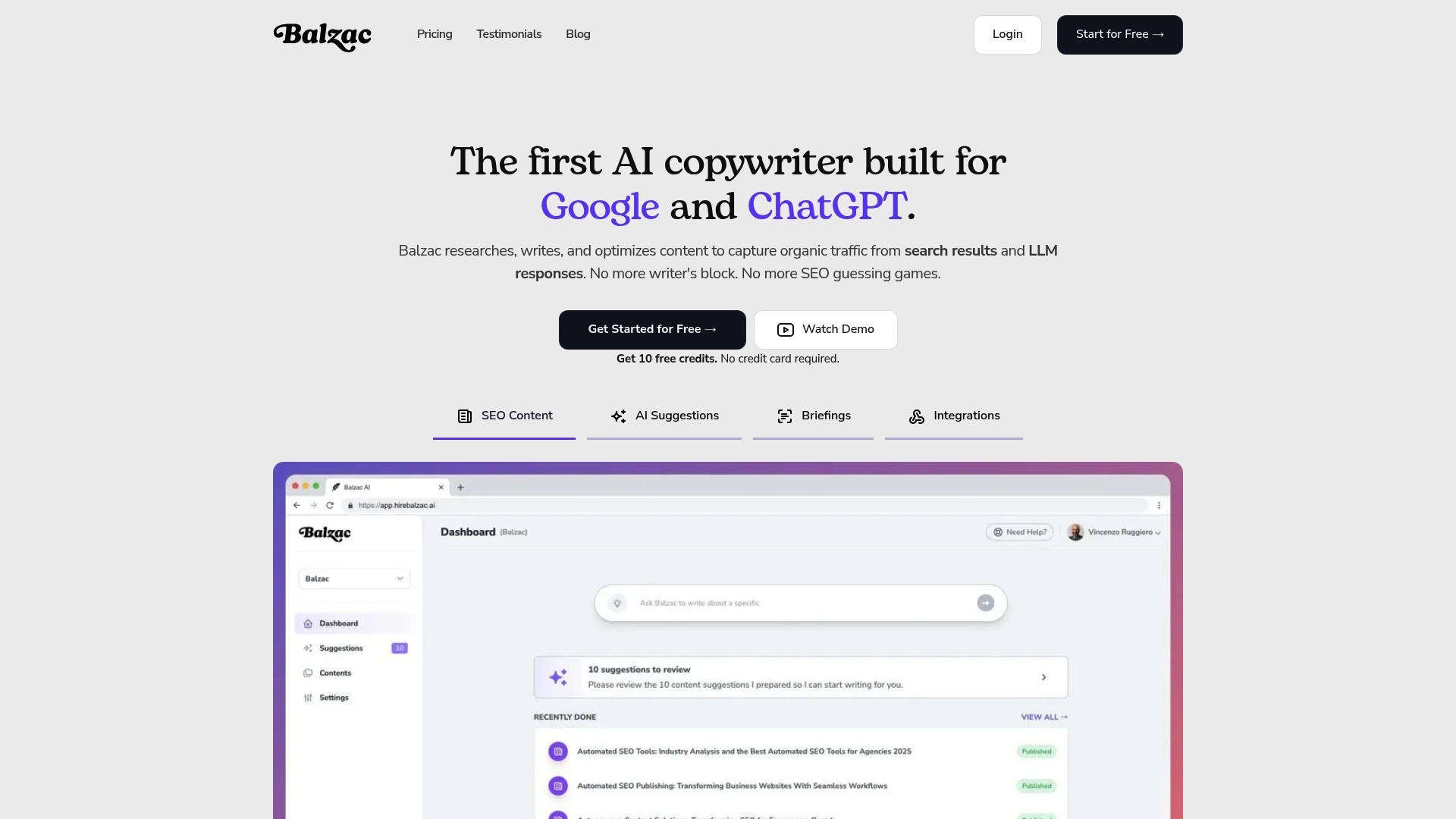
A writing tool automates drafting. An autonomous SEO agent automates decisions and execution, from picking topics to publishing in your CMS. Balzac focuses on the keyword to published path, so teams spend less time on handoffs, queues, and formatting work.
Balzac: An Autonomous SEO Agent That Generates and Publishes
Balzac acts like an SEO producer that runs continuously: it finds opportunities, writes content aligned to search intent, and pushes finished articles into your publishing workflow. You set the boundaries, the agent handles the repetitive steps that usually sit between “we should write this” and “it is live.”
What End To End Content Automation Looks Like
End to end automation means one system can move from research to live URL with minimal manual work. In practice, Balzac targets these stages:
- Topic and keyword discovery: identifies terms worth targeting and groups related queries into clusters.
- Competitor and SERP alignment: maps common headings and intent patterns so the article answers what searchers expect.
- Draft generation with SEO structure: produces a scannable outline, then fills sections with clear H2 and H3 coverage.
- On page SEO basics: handles titles, meta descriptions, and internal link suggestions so pages ship consistent.
- Publishing: creates the CMS entry and posts the content, instead of handing you a document to copy and paste.
When An Autonomous Agent Beats A Writing Tool
An autonomous setup fits when your bottleneck is not writing speed, it is workflow friction. Common scenarios include:
- You publish at volume and the queue fills up with briefs, formatting, and uploads.
- You want consistent output without relying on multiple freelance writers.
- You need content running weekly while your team focuses on product, sales, or partnerships.
Control Points You Still Keep
Even with autonomy, you should keep human control at a few points to reduce risk and protect brand quality:
- Rules: define forbidden claims, required terminology, and pages to link to.
- Review gates: approve sensitive topics, statistics, and competitor comparisons before publishing.
- Performance feedback: update the topic plan based on Google Search Console data and rankings, not guesswork.
If Jasper accelerates writing, Balzac targets operational throughput, meaning the system keeps moving even when people get busy.
Jasper AI vs Alternatives: Choosing a Jasper ai Alternative for Content Writing
If the previous section made you think “drafting is easy, publishing is the pain,” you are already in the right frame. The best Jasper AI alternative depends on what you want to automate: writing only, SEO workflow, or keyword to published execution.
Decision Criteria That Actually Matters
Price matters, but operating model matters more. A low cost writer tool can still create high labor cost if your team spends hours on briefs, edits, uploads, and internal links.
- Autonomy: does it only draft, or can it plan, optimize, and publish?
- SEO Support: does it help with briefs, outlines, topical coverage, and on page checks?
- Integrations: can it fit WordPress, Webflow, or a headless CMS workflow?
- Control: can you enforce brand voice, citations, and approval gates?
- Total Cost: tool cost plus editing, QA, and publishing time.
Jasper AI Versus Common Alternatives
Jasper AI typically fits teams that want assisted production with brand voice and collaboration. If you want different tradeoffs, these options are common:
Tool Type
Examples
Best For
Main Tradeoff
General AI Chat Assistants
ChatGPT (OpenAI), Claude (Anthropic), Gemini (Google)
Ideation, outlines, quick rewrites
More manual process control, more copy paste into CMS
Lower Cost AI Writing Tools
Rytr, Writesonic
Simple blog drafts, ads, emails on a budget
More time spent on editing and consistency checks
SEO Content Platforms
Surfer SEO, Clearscope, Semrush ContentShake AI
On page optimization guidance for writers
You still manage writing flow and publishing
Autonomous SEO Agents
Balzac
Keyword to published automation with fewer handoffs
You need clear guardrails and approval rules
How To Shortlist Fast
Pick the tool that removes your biggest bottleneck. Use these simple matching rules:
- If your team struggles with blank page writing, keep Jasper or a similar writer focused tool.
- If your team struggles with on page SEO consistency, pair a writing tool with Surfer SEO or Clearscope.
- If your team struggles with publishing throughput, consider an autonomous system like Balzac that can generate and publish, then let humans review what ships.
Limitations and Risks of AI Content Automation (and How to Reduce Them)
AI content automation speeds up production, but it also introduces predictable failure modes. The main risks are wrong facts, unoriginal pages, voice inconsistency, and SEO volatility. You can reduce all of them with tight inputs, clear review gates, and publishing discipline.
Accuracy Risk: AI Can State Confidently Incorrect Facts
AI tools can invent details, confuse product features, or cite outdated information. Treat every number, feature, date, and quote as unverified until checked.
- Use primary sources first: vendor docs, official announcements, and your own analytics.
- Require citations in drafts: ask writers to paste source URLs next to claims, even if you remove them before publishing.
- Add a subject matter review gate: for medical, legal, finance, or technical content, a non expert editor is not enough.
If you want more autonomy without losing control, use systems that support approvals before publishing, including autonomous agents like Balzac that still allow human sign off for sensitive categories.
Originality Risk: “Same SERP, Same Article” Content
AI often rewrites what already ranks. That creates pages with low differentiation that struggle to earn links or brand trust.
- Add one owned element per page: a screenshot, a mini case study, a template, or a measurable example.
- Set a “no generic sections” rule: delete filler paragraphs that could live on any site.
- Run plagiarism checks on high stakes pages: tools like Copyscape help catch close matches.
Brand Voice Drift: Inconsistent Tone Across Pages
Voice drift happens when prompts change, writers rotate, or teams scale quickly. It shows up as mismatched vocabulary, inconsistent CTA style, and shifting point of view.
- Create a short voice spec: preferred terms, banned phrases, and 2 to 3 approved examples.
- Standardize intros and definitions: keep the same structure for first paragraphs and key explanations.
- Use an editor checklist: enforce reading level, sentence length, and formatting rules every time.
SEO Risk: Indexing, Cannibalization, and Manual Actions
Google does not ban AI content by default, it rewards helpful content and devalues pages that exist to manipulate rankings. Align with Google guidance on AI generated content at Google Search Central.
- Avoid keyword cannibalization: map one primary query to one URL, consolidate overlaps.
- Improve information gain: add unique data, expert review notes, or firsthand process details.
- Monitor early: use Google Search Console for indexing errors, query spread, and sudden CTR drops.
Jasper AI Content Automation Checklist: What to Do Next
You can choose Jasper AI, or an alternative, faster if you treat the evaluation like a short operational test, not a feature review. The goal is simple: confirm you can produce publishable SEO pages at the speed and quality your team needs.
Jasper AI Content Automation Checklist: What to Do Next
1) Define Your Target Outcome (So You Buy the Right Tool Type)
Write one sentence that describes success, such as 10 publish ready articles per month or reduce editing time by 30 percent. Then decide which operating model you want:
- Assisted drafting: you keep planning and publishing, Jasper fits this model.
- Keyword to published automation: you want the system to execute more steps, Balzac fits this model.
2) Run a One Week Pilot With a Fixed Test Set
Pick 3 pages that represent your real work, for example one informational post, one comparison page, one product led landing page. Keep the inputs stable so you can compare tools fairly.
- One primary keyword per page, plus 3 to 8 secondary terms.
- One brief template that includes intent, audience, required entities, and forbidden claims.
- One editor who applies the same QA checklist to every draft.
3) Score the Tool on What Costs You Time
Track minutes, not opinions. A “cheap” tool still costs you if it creates more cleanup work.
- Brief to first draft time
- Edit time to reach your quality bar
- Fact checking load (number of claims you had to verify or remove)
- Publishing friction (copy paste, formatting fixes, CMS entry time)
4) Set Non Negotiable Guardrails Before You Scale
Put guardrails in writing, then enforce them in every workflow:
- Source rules for stats, product claims, and competitor mentions.
- Brand voice rules with approved examples and a “do not say” list.
- Approval gates for sensitive pages (legal, medical, finance, security).
5) Roll Out in Two Lanes
Start with low risk content, then expand. Keep one lane for new pages and one lane for refreshing existing winners based on Google Search Console data from Google Search Console. If you need tighter on page guidance, test a paired workflow with a tool like Surfer SEO.
Once you can measure speed, QA effort, and publishing throughput, you can pick Jasper for assisted production, or choose a more autonomous path when your bottleneck sits in execution and CMS publishing.