
Automated SEO tools offer a straightforward way to publish more content, reach new audiences, and save operational costs. For businesses built around online content, the challenge often lies in producing frequent, optimized articles without exhausting time or budget. Relying on manual processes or large writer teams rarely scales.
This guide explains how automated SEO platforms, like Balzac, combine AI content generation, real-time keyword research, and CMS integration to tackle these obstacles. By following the steps outlined here, content-driven teams can:
- Replace manual content production with 24/7 AI-driven workflows
- Produce SEO-optimized articles that match trending topics
- Cut publication times while tracking real results
The guide unpacks common pain points, explains how leading tools work, and provides clear steps for integrating automation into your business. Whether improving consistency or reducing costs, automated SEO solutions help any content-focused company unlock real growth in 2025. For further insights and updates, explore the Balzac Blog.
What Are Automated SEO Tools and Why Do They Matter?
Automated SEO tools use artificial intelligence and automation technologies to simplify routine SEO tasks. These platforms help businesses optimize content at scale, removing the need for constant manual oversight or reliance on expensive panels of writers. Traditional SEO processes involve keyword research, on-page optimization, and frequent updates. Automated solutions handle this entire workflow with speed, consistency, and data-driven precision.
Why Automation Drives Better SEO Outcomes
For content-driven businesses, visibility on search engines means growth. Automated SEO tools provide:
- Continuous content optimization: Algorithms scan web pages for SEO issues and update content as search engine requirements evolve.
- Faster, more frequent publishing: AI-driven systems reduce lead times, allowing businesses to post optimized articles multiple times per week—or even daily.
- Data-informed topics: Tools monitor trends, competitor moves, and keyword performance to suggest new content ideas with high search intent.
Speed and scale matter. Businesses no longer win by posting a handful of articles. Large-scale growth depends on the ability to publish optimized content continuously. Automated SEO tools make this possible for organizations that lack the resources of enterprise publishers. The technology takes over repetitive and technical tasks, freeing teams to focus on strategic goals and product innovation.
For example, Balzac leverages AI agents to autonomously generate, optimize, and publish content—integrating with popular platforms like WordPress or Webflow. This approach reduces operational overhead and content costs while ensuring content remains SEO-focused and current.
Reliable automation lets businesses react quickly to changing search algorithms and market trends. In a digital landscape where SEO rules shift frequently, having a tool that evolves instantly keeps brands ahead of the curve.
Top Pain Points for Content-Driven Businesses
For many content-driven businesses, consistent growth hinges on the ability to produce high-quality articles at scale and speed. Yet, several critical challenges block this path to sustained online visibility.
Increasing Operational Costs
Hiring skilled writers, editors, and SEO experts adds significant recurring expenses. In traditional workflows, paying for each step—ideation, writing, editing, optimization—results in substantial cost accumulation. This makes scaling up content output a barrier, especially for small teams or growing agencies seeking profit margins they can rely on.
Maintaining Frequent Publication
Search engines reward fresh, consistent publishing. Meeting a steady release schedule, however, requires disciplined planning and personnel to avoid lapses. Reliance on manual processes often leads to missed deadlines and lost ranking potential, which can stall site growth.
Manual, Time-Intensive Workflows
- Keyword research demands hours of sifting through tools and data.
- Manual content optimization slows output, risking outdated information.
- Uploading and formatting articles in a CMS consumes valuable time that could go into growth strategies.
Even with a streamlined team, these manual systems introduce bottlenecks. Simple changes, like updating keywords or titles, require extra steps.
Quality Assurance and SEO Consistency
Ensuring every article hits SEO and style targets is difficult when teams juggle volume and deadlines. Manual processes result in inconsistencies that erode search visibility and brand authority. Automated platforms like Balzac remove much of this friction by introducing quality checks and real-time strategy adjustments directly into the publication process.
For content-focused businesses that aim to scale in 2025, automated SEO tools are quickly becoming essential to overcoming these persistent challenges.
How Automated SEO Tools Work: Key Features Explained
Automated SEO tools combine several advanced features to simplify and optimize content publication for businesses of any size. Each functionality addresses a common obstacle in high-volume SEO-driven publishing.
AI-Powered Content Generation
AI models can now research, compose, and structure SEO-friendly articles in minutes. These systems analyze keyword data, trends, and competitor sites to build articles with the best chance of ranking. Instead of waiting for human writers, companies schedule AI to produce new content round the clock. Results remain consistent, and the process eliminates writer backlog or quality variability.
Automated SEO Optimization
The platform scans each draft for on-page SEO requirements—optimal keyword placement, correct title tags, meta descriptions, and internal linking. Adjustments happen instantly based on detected gaps. With this automation, every article meets technical search requirements before it goes live, which reduces manual SEO reviews and missed ranking opportunities.
Scheduling and Consistent Publishing
Built-in scheduling options let users set up content calendars that push articles live at the right frequency for their strategy. Whether weekly or daily, this consistent cadence boosts site authority in the eyes of search engines. It also keeps readers engaged with fresh material, avoiding the uneven gaps that hurt both visibility and user expectations.
CMS Integration for Seamless Workflow
Modern SEO tools connect directly with leading content management systems such as WordPress and Webflow. Users link their site once, then watch as articles appear automatically in their blogs. Full automation from creation to publication frees teams from repeated uploading and manual formatting. Balzac takes this even further by handling the full cycle—from research to live post—with no human touch required after setup.
Balzac: Streamlining Content Creation With Autonomous AI SEO Agents
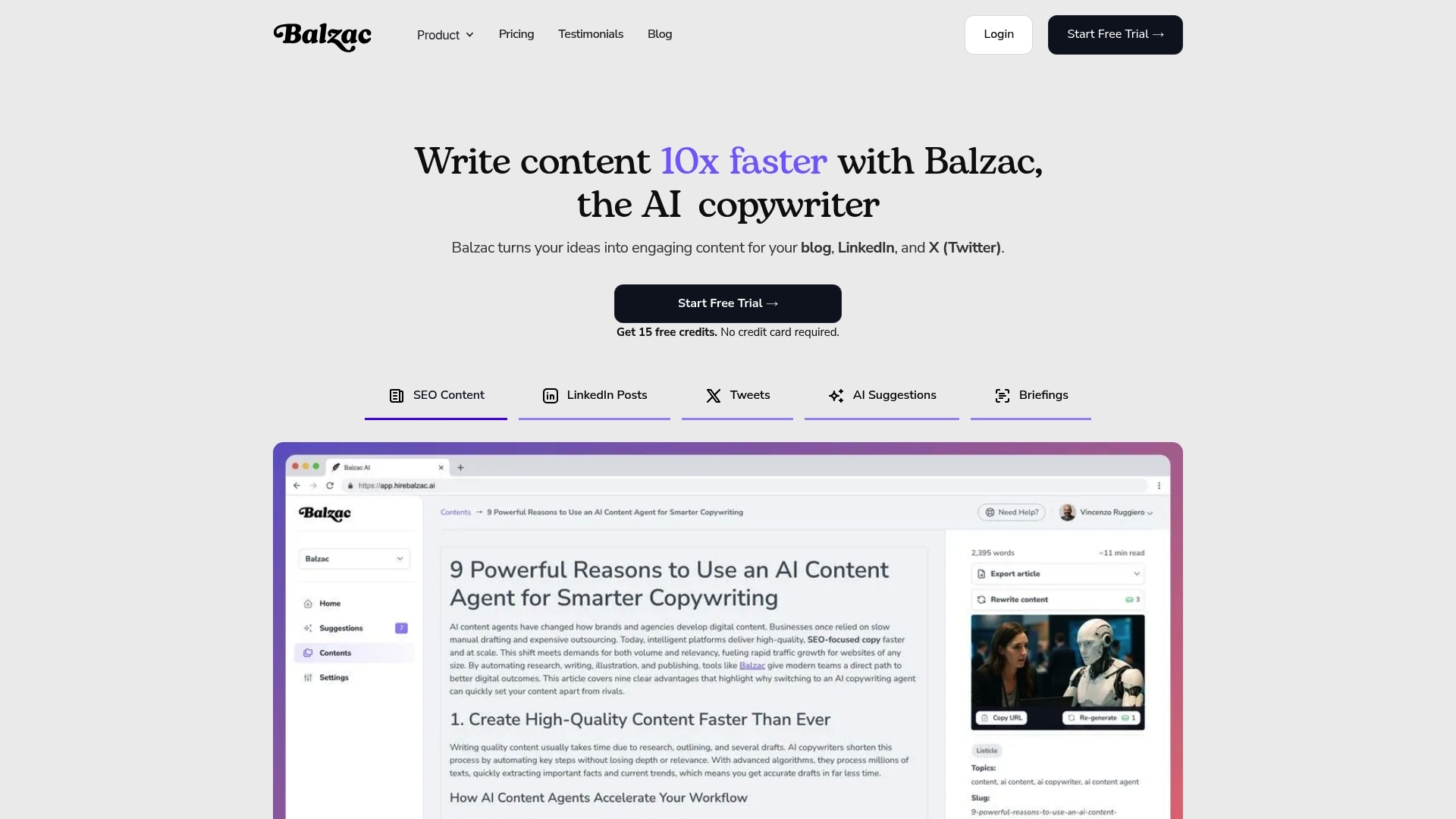
Manual content planning and production often leads to sluggish growth and high overhead. Balzac takes this burden off teams by using AI agents that deliver a complete solution—generating topics, writing SEO-rich articles, and publishing directly to content management systems, with no need for constant oversight.
How Balzac Operates as an Autonomous SEO Agent
Balzac functions without human intervention by combining real-time keyword analysis, competitor monitoring, and automated publishing. Once configured, its system can:
- Research trending topics based on your website’s focus and competitive opportunities
- Draft articles that naturally integrate SEO best practices for structure and keyword placement
- Optimize meta tags, internal links, and readability before sending content live
- Publish approved content to platforms like WordPress or Webflow according to your schedule
This process lets businesses remove the continual cycle of briefing, reviewing, and coordinating between writers and editors. Each new article maintains target quality and consistency with minimal manual check-in.
Impact on Cost and Growth in 2025
Balzac helps teams redirect their resources by cutting down time and financial investment that traditional content models require. Costs of copywriters, editors, and SEO specialists drop, while the volume and consistency of publishing increase substantially. Businesses relying on online reach can meet higher content goals without pace or quality slipping. As Google continues to reward fresh, relevant publishing, automated tools like Balzac bring a direct path to sustained growth for content-focused websites.
Best Automated SEO Tools for Agencies in 2025: Comparison and Key Players
Agencies and growing businesses need automated SEO solutions that can handle both scale and complexity. Choosing the right platform depends on several factors: core features, pricing, CMS compatibility, and ongoing effectiveness for large, diverse projects. Comparing leading automated SEO tools reveals important differences for decision makers targeting efficiency and lasting search performance.
Comparison of Key Automated SEO Tools (2025)
Tool
Main Features
CMS Support
Pricing Model
Balzac
AI autonomous content planning, generation, SEO optimization, auto publishing, competitor topic analysis
WordPress, Webflow, others
Subscription, by volume
Jasper
AI copywriting, blog post templates, SEO workflows
WordPress, Shopify
Subscription, tiered plans
Surfer SEO
Content optimization, AI writing assistant, keyword research, SERP analysis
WordPress (via plugin)
Subscription, usage-based
Scalenut
Automated outlines, topic suggestions, AI article writing, brief creation
WordPress
Subscription, capped words
Frase
Content briefs, automated drafts, SEO scoring, research
WordPress
Subscription, word-based
Each platform excels in specific use cases. Balzac uniquely offers truly autonomous content workflows by generating topics, writing, optimizing, and publishing without human intervention, which fits agencies needing hands-off scale. Other options, such as Jasper and Scalenut, provide strong AI writing but often require more manual supervision and adjustment. Surfer SEO and Frase emphasize optimization and briefs over direct end-to-end publishing.
Most top-tier solutions integrate with major content management systems to enable direct publishing. Effective automated tools also support ongoing strategy with performance tracking, workflow automation, and customizable scheduling. Subscription-based pricing remains the industry standard, though costs depend on word volume or total number of projects managed. Agencies managing multiple clients often prioritize full-cycle automation and flexible plan structures for reliable growth in 2025. If you want to learn more about available packages, visit Balzac’s pricing page.
Step-by-Step: How to Implement Automated SEO Tools Into Your Workflow
Efficient use of automated SEO tools demands more than choosing a platform. The right strategy ensures smooth integration and sustained results for content-driven teams.
Define Your Objectives and Requirements
Begin by outlining your content goals. Do you need daily posts, keyword targeting in new markets, or optimization of evergreen content? Make a list of critical features, such as AI-generated articles, scheduling, and CMS integration. This clarity guides your tool selection and team alignment from the start.
Select a Platform That Matches Your Needs
Evaluate real solutions based on:
- Content quality and ability to meet your SEO standards
- Integration with your existing CMS (WordPress, Webflow, or others)
- Functionality like topic research, competitor analysis, and auto-publishing
- Transparent pricing and responsive support
Platforms such as Balzac, Surfer SEO, and Clearscope provide varying degrees of automation, allowing you to balance control with efficiency depending on your needs.
Set Up and Configure
After selection, connect your website, authenticate the tool, and set publishing permissions. Many platforms recommend adding categories or key topics to tailor generation. Schedule publishing cadence based on your audience and SEO goals. If you are using Balzac, define focus areas so the AI can target relevant keyword clusters with minimal guidance.
Integrate With Your Workflow
Assign clear roles for monitoring automated outputs. Set regular review points to adjust keywords, approve sensitive topics, or tune publication frequency. Sync the tool with existing calendars and feedback loops to keep your workflow collaborative, not siloed.
Launch, Monitor, and Refine
Once running, track results using analytics dashboards within the tool or your website analytics provider. Adjust settings as traffic responds and use real performance data to improve topic selection and publishing pace. This step maintains alignment with SEO goals as search trends and business needs shift.
Measuring Results: KPIs and ROI From Automated SEO Content
Understanding if automated SEO content delivers business impact starts with the right metrics. Tracking key performance indicators (KPIs) lets teams adjust content strategies based on real data instead of guesswork. Automated tools simplify collecting and analyzing this data, but you need to know which metrics matter most.
Core Metrics for Automated SEO Content
- Organic Traffic Growth: Page views and new users from search show if content improvements translate to visibility and audience.
- Keyword Rankings: Positions for priority keywords indicate the effectiveness of both content quality and SEO alignment.
- Content Indexation Rate: Percentage of published pages indexed by Google tracks technical optimization and platform performance.
- Engagement Metrics: Time on page and bounce rate help reveal if users find content valuable and relevant.
Measuring Content ROI
Return on investment for automated SEO content combines traffic, rankings, and cost efficiencies. To calculate value, consider:
- Increase in organic visits versus prior periods of manual content creation
- Cost per published article compared to hiring external writers or agencies
- Development of new keyword opportunities unlocked by scalable publishing
Platforms such as Balzac include built-in analytics, giving users a clear overview of content performance and what contributes to growth. Reviewing these metrics each month guides decisions about publishing cadence or which topics bring the highest SEO yield.
Always relate content success to business outcomes, such as conversions, qualified leads, or subscriber growth. Focusing on these KPIs in 2025 ensures automated tools do more than just produce articles—they drive measurable business progress efficiently.
FAQ: Automated SEO Tools for Content-Driven Businesses
Automated SEO solutions attract interest from businesses aiming for faster growth, but many teams face common questions before moving from manual systems to AI-powered content workflows. Below are key answers to help you assess if automated SEO tools fit your business needs and growth goals for 2025.
Can Automated SEO Tools Replace Human Writers Completely?
Automated SEO tools generate high volumes of well-structured, optimized articles based on the latest keyword data and content trends. For routine blog entries, news, and SEO pages, AI solutions often sustain both quality and consistency. That said, niche topics requiring unique industry perspectives or company insights may still need a manual touch. Most teams combine automated workflows for scale with periodic human oversight for brand voice and depth when necessary.
How Do These Tools Ensure Content Quality?
Automated platforms use internal scoring systems for grammar, readability, keyword usage, and search relevance. Many tools review drafts for compliance with up-to-date SEO guidelines and integrate fact-checking steps. In practice, applications such as Balzac enable configuration for tone, structure, and approval filters. Results improve with well-defined input criteria, occasional manual review, and feedback cycles.
Are Automated SEO Tools Scalable for Agencies?
Most leading platforms support multi-client management, bulk publishing, and templated strategies, letting agencies run consistent content campaigns across several domains at once. Built-in user permissions, audit logs, and customizable rules scale to size without added friction. As an agency acquires more clients, automation sustains both speed and consistency, enabling growth without heavy staffing increases.
What Budget Should Businesses Expect?
Most automated SEO platforms offer subscription pricing based on word count, monthly article quota, or project count. Entry-level plans suit solo bloggers or small business sites, while scalable tiers serve agencies managing multiple customers. For reference, businesses typically save on hiring, editing, and SEO overhead compared to a solely manual process. Calculating expected content needs before subscribing aligns tool choice to real business goals. See some examples on the testimonials page.
Do These Platforms Integrate With Major CMS Systems?
Popular solutions, including Balzac, provide direct connections to content management systems like WordPress, Webflow, and often others. This reduces upload time, eliminates formatting repeats, and improves workflow automation. Setup involves linking your site to the tool and setting publishing preferences according to content planning cycles. Seamless CMS integration is vital for ensuring fast publishing without added technical complexity.
Is There a Risk of Duplicate or Low-Quality Content?
Most modern solutions generate unique articles from advanced AI models that analyze competitors and build original drafts. Automated processes include duplication checks and plagiarism screening to maintain authenticity. Setting parameters for target keywords, content formats, and competitive differences further reduces overlap. High-quality content is supported by platform updates in response to evolving search algorithm standards.
What Trends Will Shape Automated SEO Tools in 2025?
As machine learning models advance and search algorithms reward comprehensive answers, automated platforms will increase support for:
- Deep topical research and entity analysis
- Real-time competitor monitoring for changing topics
- More precise SEO scoring with live search intent tracking
- Improved handling of multimedia (images, video, audio)
Expect tools to become more adaptive, adjusting tone, structure, and coverage area based on performance and audience feedback. Solutions such as Balzac already provide autonomous, high-frequency publishing, a trend likely to grow across all high-volume content sectors.
Future-focused teams position themselves ahead by integrating automation efficiently while maintaining clear guidelines and oversight. Automated SEO tools significantly reduce cost, increase publication pace, and allow ongoing adaptation as growth needs shift in 2025 and beyond.