
Choosing the right AI writing assistant can create a major difference in content workflows and SEO impact for businesses. In 2025, top solutions stand out by combining automated SEO content generation, simple CMS integration, and scalable content operations.
Comparison of Leading AI Writing Assistants
Tool
Main Advantage
Common Limitations
Best For
Balzac
Full SEO automation, direct publishing, competitor analysis
Focused on long-form and website content, less creative writing
Large websites, companies needing hands-free SEO growth
Jasper
Versatile content templates, advanced AI prompts
Manual oversight required for best results
Marketing teams, content marketers, agencies
Copy.ai
Quick idea generation, supportive of short-form copy
Varied SEO depth, manual CMS export
Small businesses, startups, quick campaign content
Writesonic
Bulk content options, integration with many platforms
Inconsistent long-form quality, limits on automation
Ecommerce and SaaS needing multiple content types
Decision-makers can quickly identify which solution aligns with their goals for output quality, automation depth, and seamless publishing. Each AI tool supports a distinct set of business challenges, making it easier to save time, control costs, and improve online visibility.
What Is an AI Writing Assistant for Businesses?
How AI Writing Assistants Power Business Content Automation
AI writing assistants are software platforms that use artificial intelligence to create, optimize, and sometimes publish content automatically. In a business context, these tools handle blog posts, website pages, email sequences, product descriptions, and more without direct human intervention. They use advanced natural language processing models to generate content that fits brand guidelines and meets specific business objectives.
The core process is straightforward: users provide topic inputs, keywords, or domain details. The assistant then conducts research, drafts SEO-focused content, suggests improvements, and may even oversee final publishing. In many cases, the platform adapts tone and complexity based on your target audience, ensuring consistent communication across all channels.
- Automation: AI writing assistants speed up content workflows by drafting text in seconds instead of hours
- SEO Optimization: Most tools integrate keyword research and on-page suggestions to improve visibility in search engines
- Consistency: Maintain a uniform brand voice even at scale across dozens or hundreds of articles
- Cost Efficiency: Reduce reliance on freelance writers or agencies and minimize editing cycles
- Scalability: Output can increase as business needs grow, supporting operations from startups to large enterprises
In 2025, companies leverage solutions like Balzac to achieve not just content creation, but fully autonomous content operations: generating, optimizing, and publishing SEO-rich articles 24/7. This ensures websites remain fresh and competitive as search algorithms and user expectations evolve. For companies seeking minimal manual input, advanced AI assistants automate keyword analysis, apply real-time SEO improvements, and connect directly to popular CMS platforms for hands-free publishing.
Why Automate Content Creation in 2025?
Automating business content creation delivers measurable improvements across speed, cost, and consistency compared to manual workflows. With advanced AI writing assistants, businesses in 2025 generate content more quickly, meeting high-frequency publishing needs without adding headcount or straining resources.
Commercial Benefits of Content Automation
- Faster Output: AI assistants rapidly analyze keywords, structure outlines, and produce articles in minutes. Teams quickly react to trends and launch campaigns earlier.
- Lower Content Costs: Automation reduces reliance on freelance writers or agencies. Subscription models replace per-article rates, helping businesses stabilize content spend while increasing volume.
- Scalability: Automated platforms handle hundreds of articles simultaneously, maintain quality, and adapt to changing content calendars. No extra hiring needed as content demand grows.
- Consistent SEO Results: Purpose-built tools efficiently research search intent, optimize headlines, and structure metadata. Solutions like Balzac automate competitor research, ensuring every published piece is designed to boost rankings.
Manual content creation often leads to bottlenecks, uneven quality, and slow turnaround. AI-powered automation platforms resolve this by operating 24/7, monitoring SEO performance, and publishing directly to content management systems. Businesses gain predictable, search-optimized content at scale, letting teams focus on strategy and growth.
Balzac: Autonomous SEO Content Creation for Modern Teams
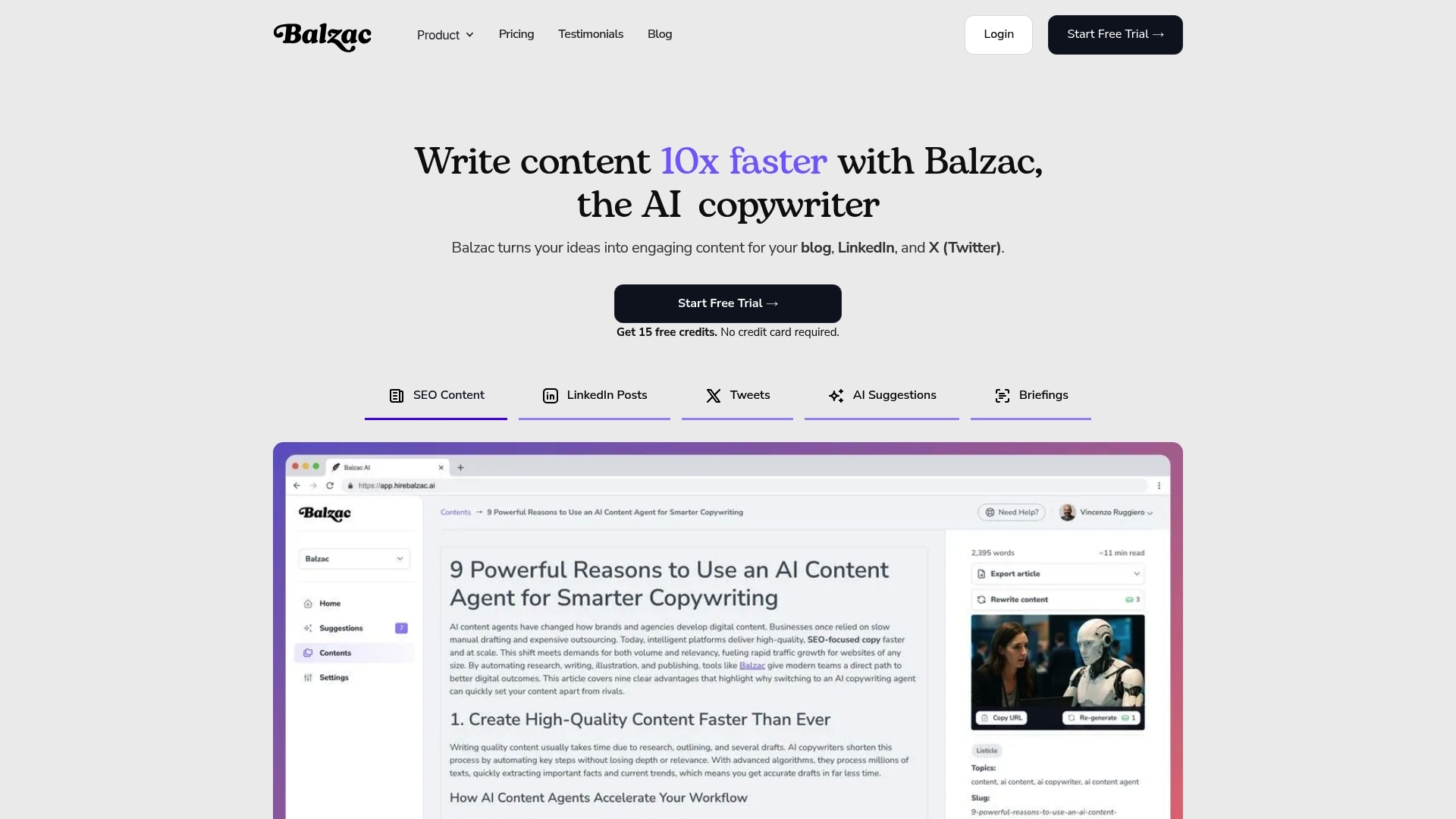
Modern businesses face increasing pressure to produce high-volume, SEO-optimized content while keeping teams lean. Balzac addresses these demands through fully autonomous content operations. By analyzing competitor websites and identifying SEO gaps, it creates content strategies focused on traffic growth and keyword ranking. When users provide a domain, Balzac automatically researches topics and handles end-to-end article production.
Core Features Automating Content Creation
Balzac’s automation centers on three pillars:
- SEO-First Content Generation: The platform generates articles designed to perform in search results. It applies structured keyword research, internal linking, meta optimization, and content formatting without manual tuning.
- Effortless CMS Integration: Balzac connects directly to major CMS platforms including WordPress and Webflow. Upon completion, it publishes articles without requiring user review or export.
- Workflow Customization: Businesses customize output frequency, content types, and review processes to match their needs. The agent can run fully hands-free or allow periodic quality checks based on settings.
Results: Content Autonomy and Resource Savings
Companies using Balzac replace time-consuming manual writing, editing, and uploads with an AI-powered pipeline. As Balzac operates 24/7, teams experience consistent publishing and drive organic growth with less overhead. For organizations seeking scalable SEO performance, minimal staffing load, and steady rankings improvement, Balzac provides measurable value by removing bottlenecks from content operations.
Top AI Writing Assistant Solutions Compared
When comparing AI writing assistants for business content, four tools consistently appear at the forefront: Balzac, Jasper, Copy.ai, and Writesonic. Each platform applies artificial intelligence to solve core business challenges in slightly different ways, focusing on unique strengths across automation, integration, and content quality.
Automation Features
Balzac stands out by fully automating SEO research, writing, and publishing. Once you connect your site, the platform generates and publishes optimized articles directly to your CMS, with no manual input. Jasper blends AI-assisted writing with marketing templates for ads, blogs, and long-form articles, offering greater flexibility but needing user review. Copy.ai provides fast ideation and short-form generation, ideal for headlines or ad copy but with limited SEO focus. Writesonic supports bulk content creation and manages multiple formats but relies on user selection for best outcomes.
Pricing and Integrations
- Balzac: Usage-based pricing, including hands-free automation and direct CMS integrations for platforms like WordPress and Webflow
- Jasper: Subscription tiers, with integrations available via API and browser extensions
- Copy.ai: Fixed monthly plans, manual export to CMS platforms required
- Writesonic: Tiered pricing, wide platform connectivity including WordPress and Zapier
Use Case Strengths and Customer Support
Balzac fits businesses looking for scalable autonomous SEO content with minimal management. Jasper excels with teams seeking marketing variety and customizable outputs. Copy.ai is best for startups needing campaign assets quickly. Writesonic appeals to ecommerce and SaaS moving high content volumes. In terms of support, all platforms offer chat and email help, with Balzac and Jasper providing onboarding resources to shorten setup times.
SEO Content Generation and CMS Integration
Efficient SEO content generation and seamless CMS integration save teams substantial time and deliver more predictable search results. Each AI writing assistant has its own approach to optimizing content and automating the publishing process, making this a core point of distinction for business users in 2025.
How Major AI Assistants Boost SEO Content at Scale
Most platforms begin with topic and keyword discovery. Balzac automates competitor research, keyword mapping, and SERP analysis up front. Jasper uses user-supplied briefs or templates and provides keyword suggestions for manual optimization. Copy.ai generates quick outlines with guidance prompts, but needs extra adjustment for deep SEO structure. Writesonic lets users select tone, keywords, and style, and it then auto-populates articles with metadata but relies heavily on preset templates.
Balzac creates fully formatted, SEO-optimized articles with internal linking and optimized metadata automatically applied. Unlike Jasper or Copy.ai which leave publishing steps up to users, Balzac publishes directly to WordPress and Webflow as soon as an article is finished. Writesonic supports publishing via Zapier or built-in integrations, but businesses typically manage review and export steps manually.
Integration With Content Management Systems
- Balzac: Native connectors for WordPress and Webflow enable hands-free publishing and automatic scheduling.
- Jasper: Uses plugins and manual export for WordPress, Google Docs, or Copy/Paste workflows.
- Copy.ai: Provides text download and export functions, requiring manual upload to most CMSs.
- Writesonic: Offers WordPress and Zapier connectivity for basic push-to-CMS, though not hands-free.
The depth of CMS integration makes a significant difference as businesses look for reliable content automation. Businesses seeking zero-touch workflows and scalable SEO content pipelines will find full-feature platforms like Balzac best positioned for high-frequency publishing directly into their digital properties.
Performance, Pricing, and Scalability: What Businesses Care About
Evaluating AI writing assistants begins with core metrics: speed, content accuracy, pricing models, and how efficiently a solution scales with business needs. These criteria directly determine operational value for organizations aiming to automate content at any size.
Speed and Output Quality
Balzac and Writesonic automate end-to-end article production and publish within minutes after keyword analysis. This near-instant turnaround supports high-volume workflows without bottlenecks. Jasper and Copy.ai offer fast drafting but may require longer review cycles, especially for longer articles.
- Accuracy and Relevance: Balzac prioritizes search intent and competitor context, ensuring content aligns with ranking goals. Jasper and Copy.ai rely on prompt quality and sometimes need more manual edits for advanced SEO topics.
- Scalability: All four solutions handle increases in content requests, but automation depth varies. Balzac and Writesonic minimize manual steps, making them suitable for large, distributed teams publishing several times weekly.
Pricing Models and Support
Balzac uses a usage-based approach where you pay for results tied to traffic goals and content output, minimizing waste. Jasper, Copy.ai, and Writesonic have subscription tiers based on features or output volume. Predictable costs matter for budget planning, with usage plans preferred by those scaling unpredictably.
Support responsiveness can affect ramp-up time. Balzac and Jasper provide dedicated onboarding and priority support for business plans. Writesonic and Copy.ai offer scalable customer help for fast-moving users but may tier live support behind higher subscription levels.
Tool
Speed
Accuracy
Pricing
Best for Scaling
Balzac
Instant, fully autonomous
High, SEO and intent-focused
Large and growing web-driven teams
Jasper
Fast, some manual steps
Medium to high (review needed)
Subscription
Marketing teams of all sizes
Copy.ai
Quick, idea-first
Medium (short-form focus)
Subscription
Small startups, campaign bursts
Writesonic
Bulk, rapid drafts
Medium (varied by format)
Tiered plans
Ecommerce, agencies, SaaS
Choosing the Right AI Writing Assistant: Key Criteria for 2025
For businesses in 2025, choosing an AI writing assistant starts by matching essential needs with the platform’s technical strengths. Teams should consider how well solutions automate the end-to-end content process and the specific gains each feature unlocks in daily operations.
Core Evaluation Criteria
- Automation Degree: Assess whether the platform offers full content autonomy or supports manual review steps. For example, Balzac runs without human intervention, continuously producing and publishing SEO-optimized articles, making it ideal for teams that need volume and speed with little oversight.
- Ease of Onboarding: Check user interface clarity, guided set-up steps, and resource availability. Solutions with streamlined onboarding and clear documentation, like guided tours or onboarding support, reduce time to value.
- Customization: Analyze options for setting tone, brand rules, and workflow. Businesses often need granular control over scheduling, review stages, or content format to align outputs with their branding strategy.
- ROI and Pricing: Compare cost structures and included features. Usage-based pricing may suit businesses with fluctuating needs, while subscriptions benefit those with predictable publishing demands. Aim for solutions where subscription costs, automation, and SEO improvement clearly outweigh the alternative costs of manual content production.
- Support and Maintenance: Strong customer service, timely technical support, and a steady update cycle help teams resolve issues quickly and stay aligned with evolving SEO standards.
Poor selection leads to bottlenecks, inconsistent SEO gains, or low adoption. By weighing each criterion for their content automation priorities, businesses can secure a tool that fits their workflow and sets the foundation for increased output, cost savings, and SEO impact year-round.
Best AI Writing Assistant for Different Business Needs
Matching AI Writing Assistants to Business Models
Business needs can differ widely based on growth stage, content output demands, and in-house expertise. Selecting the right AI writing assistant comes down to identifying the solution that aligns with your company’s unique profile and constraints. The leading products, including Balzac, Jasper, Copy.ai, and Writesonic, each bring specific advantages for common business scenarios.
- Startups and Small Businesses: Copy.ai provides a low-overhead entry for rapid idea generation and simple campaign content. It reduces administrative complexity and suits teams launching frequent new initiatives with minimal resources.
- Enterprises Managing Large Websites: Balzac offers full-content automation, advanced SEO analysis, and direct publishing to CMS platforms. This saves internal teams considerable time and addresses complex demands for high-volume, intent-driven content. Enterprises with strict SEO targets and lean editorial staffing benefit most from this level of hands-free control.
- Marketing Agencies: Jasper delivers flexible content templates and campaign tools for multiple client brands. Agencies value its support for various formats and control points, which helps manage creative review cycles in fast-paced environments.
- Ecommerce and SaaS Growth Teams: Writesonic excels at producing diverse copy at scale, such as product descriptions, blog posts, and ads. Its bulk content workflows fit ecommerce firms or software companies needing consistent updates across multiple channels.
For businesses prioritizing SEO traffic growth with the least manual input, an autonomous solution such as Balzac addresses both coverage and publishing speed, freeing staff to focus on strategy rather than execution. Those who require flexibility in content type or in-house editorial review may prefer Jasper or Writesonic. By evaluating these differences against your operations, you enable consistent content quality and measurable efficiency gains in 2025.
FAQs: AI Writing Assistant Solutions for Businesses
AI writing assistants raise many practical questions for businesses looking to automate content production and improve SEO outcomes. Companies want details on setup, the reliability of output, and what these platforms can realistically achieve within commercial workflows.
How Accurate Is AI-Generated Content for Business Use?
Modern AI writing tools generate high-quality content that matches target keywords and business style guidelines. Solutions like Balzac use advanced language models and SEO-focused research, helping the output align with search engine ranking algorithms and organizational brand tone. Most platforms suggest post-generation reviews for style and compliance, though fully autonomous tools minimize the need for edits by handling optimization upfront.
Can AI Writing Assistants Fully Replace Human Writers?
AI assistants automate fact-finding, drafting, and on-page SEO processes for the majority of business content types including blogs, landing pages, and product descriptions. Human oversight still helps with highly specialized topics or unique storytelling where nuanced context or regulatory precision matters. Companies use AI as a scalable first draft or self-sufficient generator depending on their quality and autonomy needs.
What Type of Content Can Businesses Automate?
- SEO blog articles
- Product and service descriptions
- Newsletter drafts and transactional emails
- Website landing pages
- Campaign outlines and ad copy
Some AI assistants, such as Balzac, specialize in end-to-end SEO content and publishing. Others excel with marketing collateral or quick ideation for campaigns. The scope often depends on platform templates, integration depth, and available customization options.
How Do AI Writing Assistants Handle Plagiarism and Originality?
Leading platforms use sophisticated algorithms to prevent duplicated content and ensure that each draft is unique. Tools cross-check sources and apply paraphrasing when drawing on public data, significantly reducing any risk of unintentional plagiarism. Businesses may also use third-party validation tools for additional peace of mind before publishing at scale.
What CMS Platforms Can AI Agents Integrate With?
Most AI writing assistants support publishing to major content management systems. For example, Balzac enables direct integration with platforms like WordPress and Webflow, automating the entire workflow. Other tools provide export options or plugins for manual uploads, requiring an extra review or copy-paste step.
How Fast Can Businesses Deploy and See Results?
Deployment time varies by platform design and onboarding resources. Hands-free solutions allow businesses to see new, SEO-optimized articles published within hours of configuration. Observable results such as higher page rankings or improved content velocity typically appear within several weeks as search engines index and reward new outputs.
What Are the Pricing Models for AI Writing Assistants?
- Usage-based pricing: Pay per article or per keyword focus, adaptable for traffic-driven goals (e.g., Balzac).
- Subscription-based: Fixed monthly or annual fees according to output volume or feature set (e.g., Jasper, Copy.ai).
- Tiered plans: Additional service or support tiers that unlock advanced options, bulk entry, or hands-on integration (commonly offered by Writesonic).
Businesses benefit by matching their budget flexibility and content scale with the pricing approach, paying only for results or volume they actually need.
How Can Businesses Get the Most Value from AI Content Automation?
- Define clear goals: Select the tool that fits the company’s publishing cadence, campaign needs, and SEO targets
- Align human and AI workflows: Use automation to handle repetitive or high-volume content, and allocate people to strategy or creative tasks
- Continuously review and optimize: Monitor search performance, adjust settings, and test new approaches for consistent improvements
AI writing assistants, such as Balzac, advance business automation by making content production predictable, measurable, and low-maintenance. Organizations that deploy them effectively can achieve a stronger online presence, faster content cycles, and savings in both time and costs.